
A Dermatologist Reviewed His 1,200 Most Recent Hair Loss Cases. Every Single One Had The Same Thing In Common And It Wasn't Their Hair.
A board-certified dermatologist explains the layer of the scalp every hair loss product on the market is missing and what happened when he ran a clinical trial on a protocol that finally addressed it.

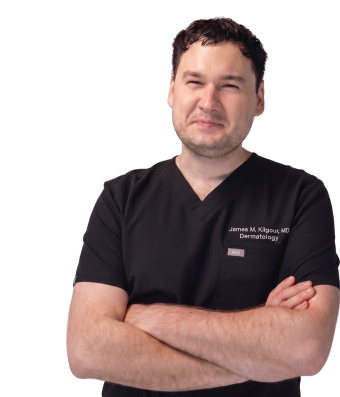
Dr. James Kilgour, MD
Board-Certified Dermatologist, Stanford-Trained · Published May 06, 2026
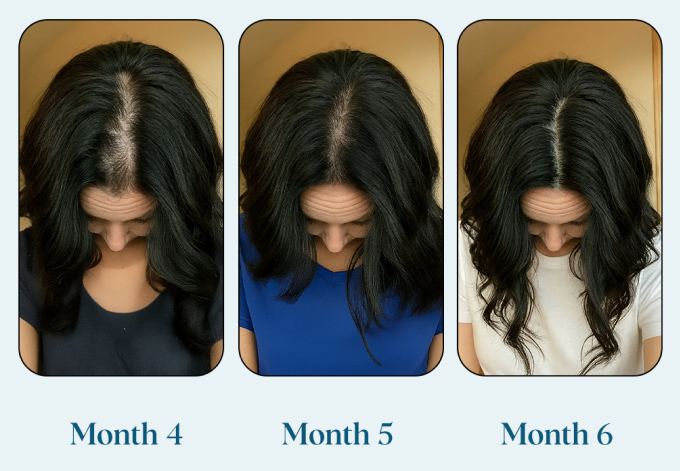
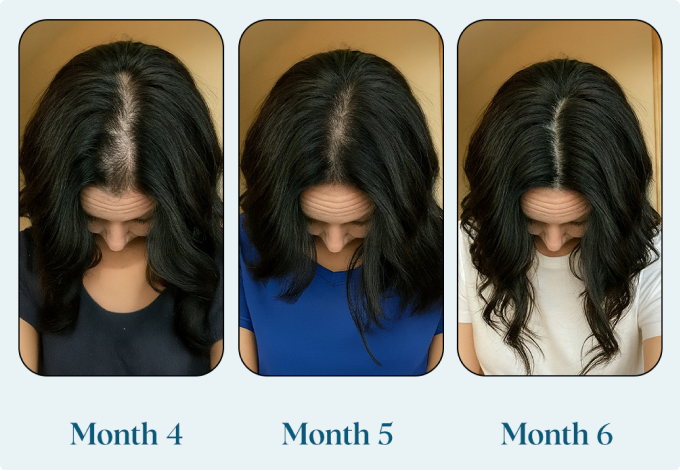
A woman sat down in my exam room a few years ago. Mid-forties. Holding her phone in her lap with two fingers, the way patients do when they've been screenshotting things they're afraid to ask out loud.
She had been to four doctors before me. She had a ziplock bag in her purse with the hair she pulled out of her shower drain that morning, because the third doctor had told her to bring it in and the fourth had laughed when she did.
She'd been on minoxidil for nineteen months. Two rounds of supplements. A red light cap she still wasn't sure had been worth $1,200. She'd cut sugar. She'd cut dairy. She'd cut her hair short twice, hoping it would buy her time.
Nothing had worked.
She didn't ask me what to try next. She asked me, very quietly, if it was time to start looking at wigs.
I'd seen versions of this woman maybe four hundred times by then. By the time I closed the file on patient number 1,200 - every one of them between 38 and 65 - I had stopped prescribing what every other dermatologist in America was still prescribing.
"Not because the drug was unsafe. Because it had been built for the wrong layer."
This is the article I wish she'd read before any of those four doctors had touched her.
The Layer Nobody Treats
If you've been losing hair for more than a year, you have probably been told one of three things.

It's genetic. It's hormonal. It's stress.
All three are partially true. None of them are the whole story, and none of them point to what's actually going wrong - which is that the tissue holding your hair in place has been aging at a rate the rest of your body doesn't experience, and almost nothing on the consumer market is built to address it.
Your scalp.
I know how that sounds. The scalp is the thing you wash. It's the thing the shampoo touches. It's not where you think hair loss happens.
But the scalp isn't a surface. It's a living layer of tissue with its own blood supply, its own hormone receptors, its own immune behavior, and its own aging clock. And in women, that clock runs faster than almost any other tissue in the body - by some measurements, up to ten times faster than the skin on your face.
"That tissue is what holds every strand on your head in place. It's also what tells every empty follicle when to grow the next one."
When the tissue ages, two things start happening. They happen at the same time. They look like one problem from the outside. They are not.
Once you understand that they're separate, you understand why almost nothing has worked.
What's Actually Happening Underneath Your Hair
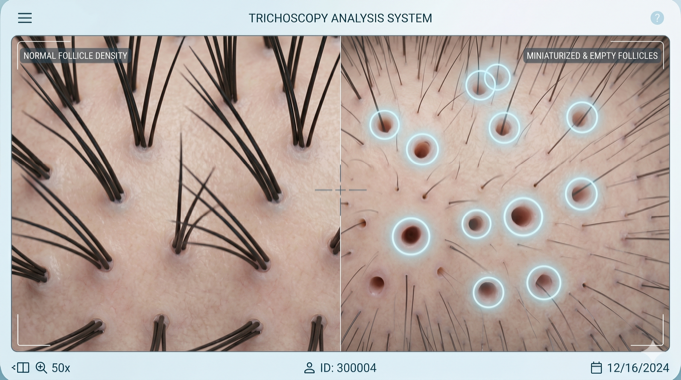
Let me show you what I see when a woman like the one in my office sits down in front of me.
I run a 40x trichoscope across her scalp. It's the imaging device dermatologists use to read the tissue beneath the hairline - the equivalent of an ultrasound for the top layer of the scalp.
Two things show up on the screen.
The first is eviction. Healthy strands - fully pigmented, full cuticle, years of growing left in them - being pushed out of the scalp before their natural cycle is complete. The brush. The pillow. The drain. Every healthy strand on your bathroom floor is the visible evidence of an aging tissue evicting it before it was done.
The second thing on the screen is harder to spot, and almost no general practitioner looks for it. Empty follicles. In a healthy scalp, when a follicle exits its rest phase, it immediately receives a chemical signal from the dermal papilla - a tiny cluster of cells at the base of the follicle that acts as a control center - telling it to start producing the next strand. That's the cycle. Out, in, out, in, for decades.
In an aged scalp, the signal stops arriving.
The follicle exits its rest phase normally. It's ready. It's empty. It's waiting. And the message just doesn't come.
Dermatology has two names for what an aged scalp does to your hair. Most women have never heard either.
PHASE 1
ANAGEN RELEASE
The follicle is pushed out early.
PHASE 2
KENOGEN
The follicle never grows hair again.
"On the average head over 45, that's roughly twenty-five thousand individual hairs. The density of six full hair transplants. Already there. Already alive. Each of them paused."
Two failures. Happening simultaneously. Looking from the outside like one problem.
Now look at what's available to consumers.
Minoxidil works on blood flow to the existing follicle. It does not address kenogen. It does not address scalp tissue aging.
Finasteride works on DHT - a hormone, not a tissue. It does not address kenogen. It does not address scalp tissue aging.
Hair vitamins work on nutritional inputs. They do not address kenogen. They do not address scalp tissue aging.
PRP works on existing follicles. It does not address kenogen.
Topical biotin, peptide masks, scalp scrubs, derma rollers - built for the surface, the strand, or the existing follicle.
Not a single one of them is built for the empty follicles. And almost none of them are built for the tissue that's evicting the healthy strands in the first place.
This is why your hair keeps getting thinner no matter what you do.
You can stop the shedding completely and your hair will continue to thin, because the empty follicles aren't refilling. You can wake the empty follicles up and your hair will continue to fall out, because the eviction is still happening.
"The math only works if both stop at the same time."
So why is this happening to your scalp specifically — and why now?
Most women have spent twenty years building a skincare routine for their face.
Cleanser. Vitamin C. Retinol. SPF. Moisturizer. And during those same twenty years, the tissue four inches above their forehead has been aging without a single one of those interventions.
Three reasons stack on top of each other to make scalp tissue age faster than any other skin you have.
Reason 1 — UV DAMAGE
Hit every day. Never protected.
Sunscreen on your scalp is the rarest skincare habit in dermatology. Decades of unprotected sun damage no other skin on your body has experienced.
Reason 2 — PERIPHERAL TISSUE
Last to get blood. First to lose it.
The scalp sits at the top of your circulatory map. Every nutrient, every hormone, every reparative compound has to travel further to reach it.
Reason 3 — ESTROGEN RECEPTORS
More per square inch than almost anywhere else on your body.
Estrogen keeps your scalp tissue active. When it falls, every receptor goes quiet at once.
That third reason is why you're reading this article right now.
Estrogen falls in perimenopause. It falls in menopause. It falls during the rapid metabolic shift when women lose weight quickly on a GLP-1 medication. It falls when thyroid function drops. It falls in the postpartum period. It falls under chronic stress.
"Different door. Same room. Same scalp tissue suddenly stops receiving the signal it has relied on for decades."
The eviction starts. The dormancy follows. This is why women experiencing very different life events - a 52-year-old in menopause, a 34-year-old eight months postpartum, a 41-year-old who just lost forty pounds, a 38-year-old managing Hashimoto's - all describe the same thing. Brush. Drain. Pillow. Part line widening. Different starting points. Identical mechanism in the tissue.
I Failed My Mother For Two Years
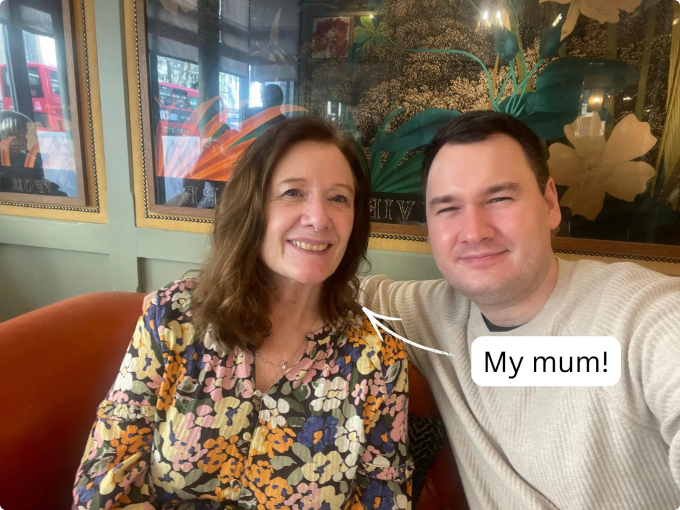
Her name is Gaynor. She's my mom.
She started losing her hair at 58, two years into menopause, and she didn't tell me about it until she'd already given up on the first three things she tried.
I want to be honest about something. As her son, I had access to everything. I'm a dermatologist. She had unlimited consultations with me. She had unlimited consultations with the colleagues I trained alongside. She had access to every prescription, every supplement, every off-label thing you can imagine.
She used the things I gave her. Quietly stopped. Didn't tell me.
I found a half-finished bottle behind the Aquaphor in her bathroom one weekend. She looked at me and said, "It wasn't working, James."
"What failed her wasn't her effort. The protocols I'd been trained to give her had been built, every one of them, for the wrong layer of her scalp."
That was the moment. Not a noble moment. A guilty one. I'd given my mother forty years of inherited assumptions and watched them fail her because nobody before me had bothered to ask whether the assumptions were aimed at the right thing.
I quit prescribing what I'd been prescribing. I started reading. I started building.
Eighteen months later I had a prototype.
I gave it to her at Christmas. She told me, with the particular flatness of a woman who has stopped expecting anything to work, that she would use it because I asked her to.
She has now used it for three years.
She is 68 and her hair is thicker than it was at 55-year-old.
That's the actual origin story. A son who couldn't stand watching his mother lose something that had been preventable the whole time.
The Study That Changed What I Prescribe
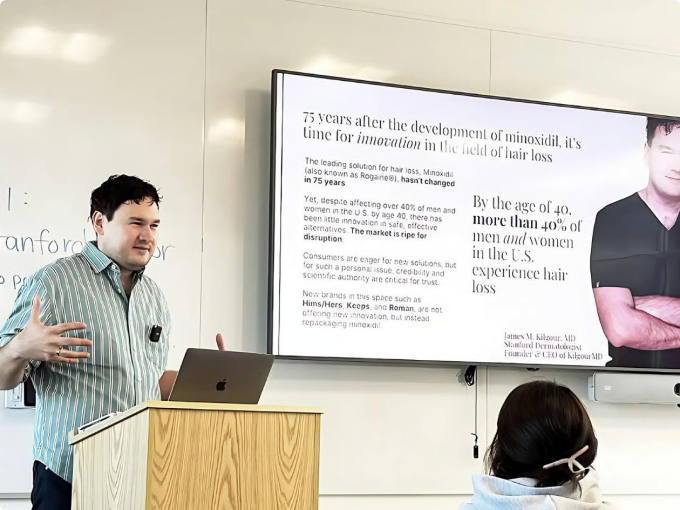
There's a study that almost nobody outside dermatology has heard of, but it should have ended forty years of how this category gets treated.
It was published in the Proceedings of the National Academy of Sciences in 2021. The researchers were trying to answer one question: when a follicle in an aging scalp stops producing hair, is the follicle the problem, or is the tissue around it the problem?
So they ran a swap.
They took follicles from thinning, miniaturizing scalps - the kind any clinician would describe as "dying" - and transplanted them into healthy young scalp tissue.
Those follicles started cycling normally. Producing terminal hair. Functioning like nothing had ever been wrong with them.
Then they ran the swap in reverse. They took healthy, fully cycling follicles from young scalps and transplanted them into the kind of tissue a 55-year-old woman has on her head.
Those follicles stopped producing hair within weeks.
"Same follicle. Different outcome. The variable wasn't the follicle. It was the tissue around it."
Forty years of products built for the follicle. The follicle was never the problem.
I read that study six months after my mother quietly stopped using the third treatment I'd recommended to her. That's when I stopped sleeping for a few weeks and started reading every paper I could find on scalp tissue, dermal papilla signaling, and the mechanism behind kenogen.
What I found is what the next section is about.
“What Happened When 43 Women Used It For Four Months”

I commissioned an independent third-party clinical trial through Dermaclaim - a research organization I don't own, don't fund the science of, and have no financial relationship with beyond paying for the trial itself.
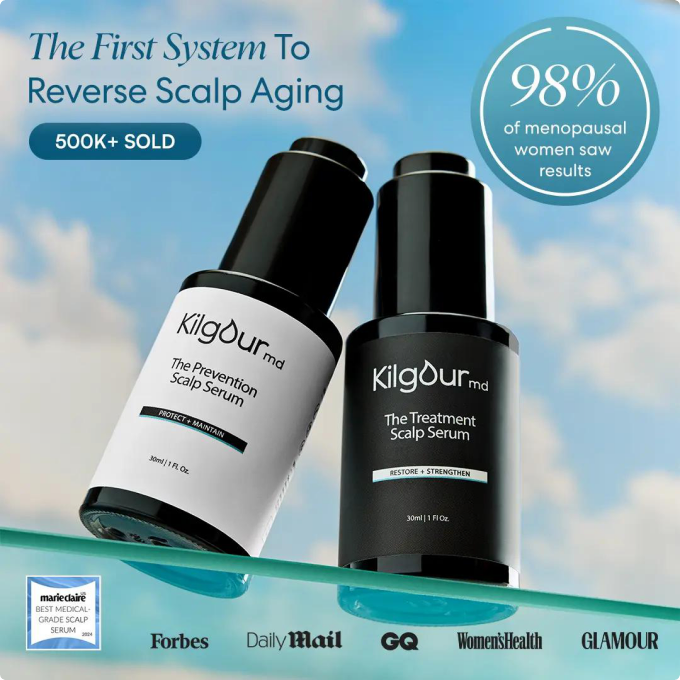
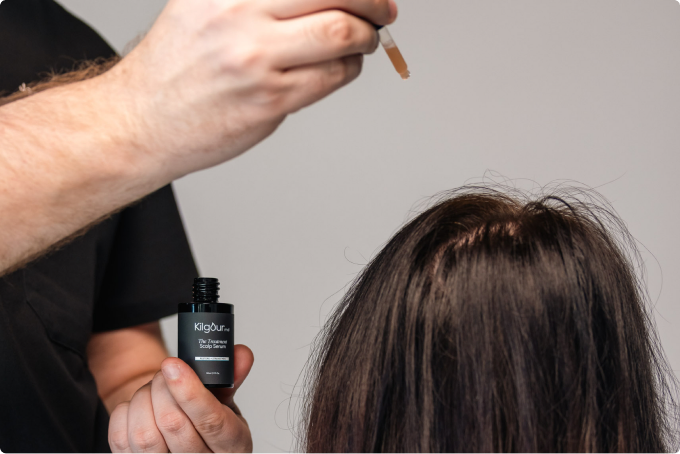
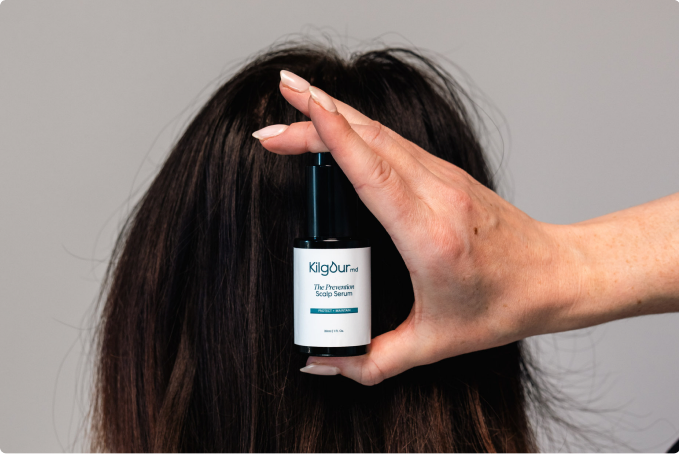
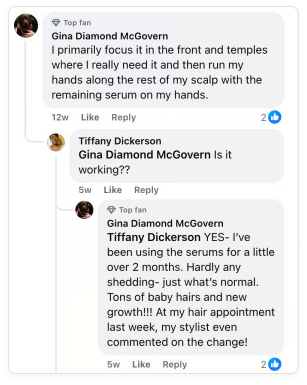
Forty-three women. Ages 38 to 65. Every one of them had previously tried at least one other treatment and watched it fail. They were given the two serums and asked to apply them for sixty seconds before bed. Nothing else changed.
These are the full numbers Dermaclaim returned.
By Week 6 — The Shedding Stops
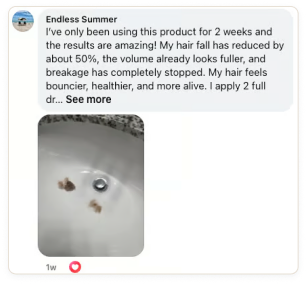
95% of participants reached near-cessation of visible shedding.
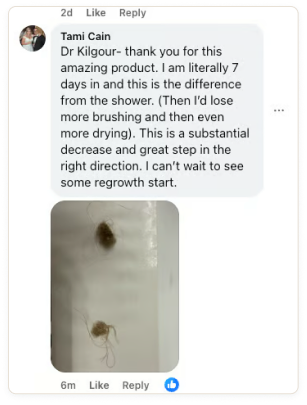
Standardized wash counts. Standardized combing tests. The eviction stopped. For most women in the trial, this was the first morning brush-out in years without a visible clump of hair.
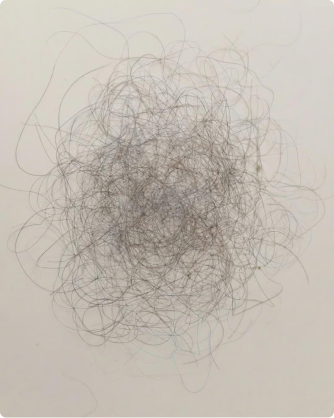 Week 6
 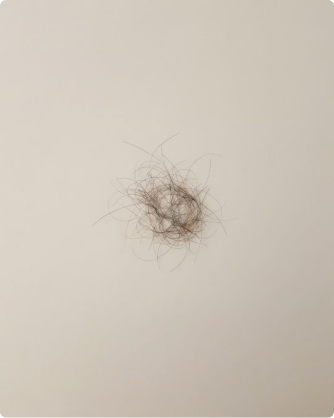 Week12
 Week 12 — The Empty Follicles Refill
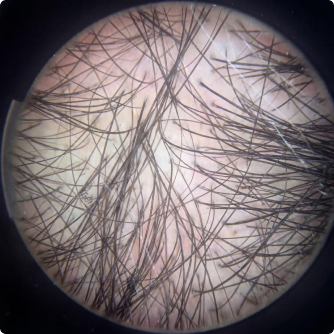
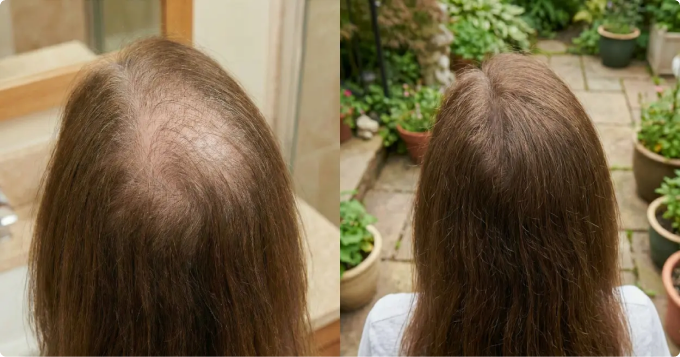
Each participant produced an average of 10,200 new hairs, measured by trichoscopy and counted by hand.
The follicles in kenogen - the ones written off as dead - started receiving the signal again. Hair density increased by an average of 79%.
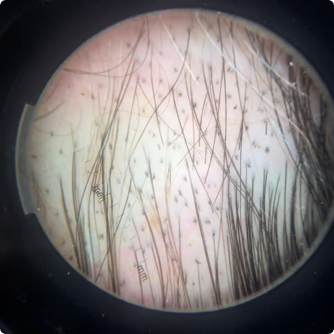 Week 0
  Week 12
 Day 120 — The Result Holds
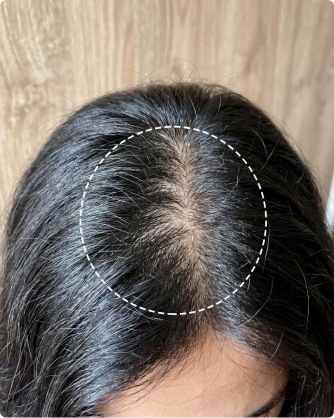
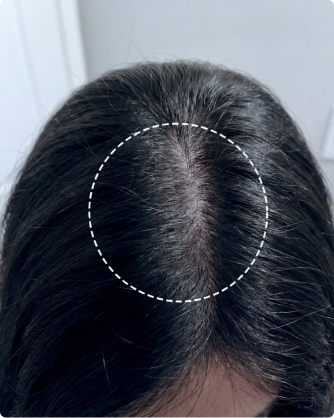
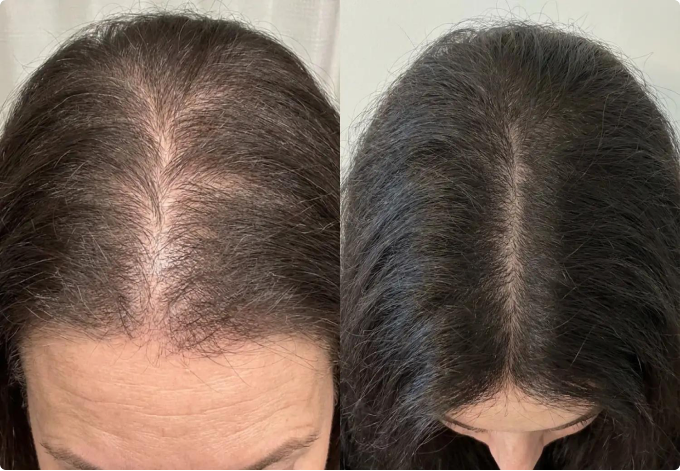
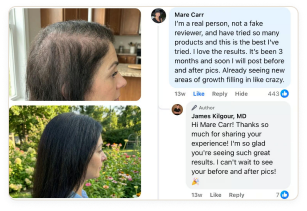
The response rate locked in at 98%. 42 out of 43 women showed measurable improvement on every primary endpoint. The improvements continued through the final month rather than peaking and falling back. New equilibrium, not a temporary spike.
 Before
  After
After The Numbers Dermaclaim Released
3× faster than the leading prescription. 0 side effects. 0 dropouts.
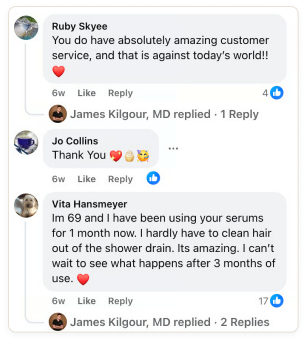
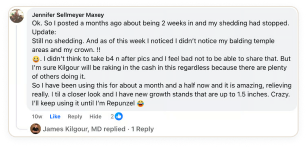
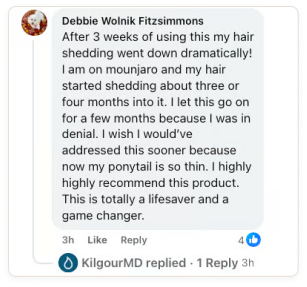
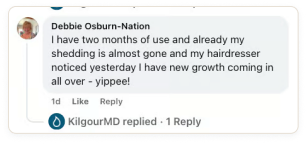
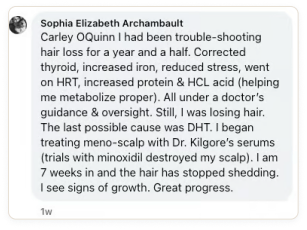
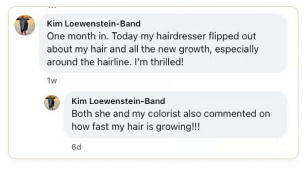
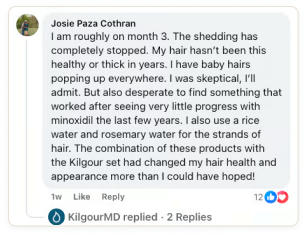
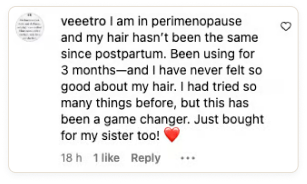
And one number Dermaclaim didn't measure: 43 out of 43 women asked if they could keep using it after the trial ended.







Free shipping · refund if it doesn’t work